• Skip to primary navigation
  • Skip to main content

The Oyster River Cafe

  • Home
  • Archives
  • About
  • Contact

Laurie Jones

The Guadalhorce Nature Reserve

March 8, 2025 By Laurie Jones

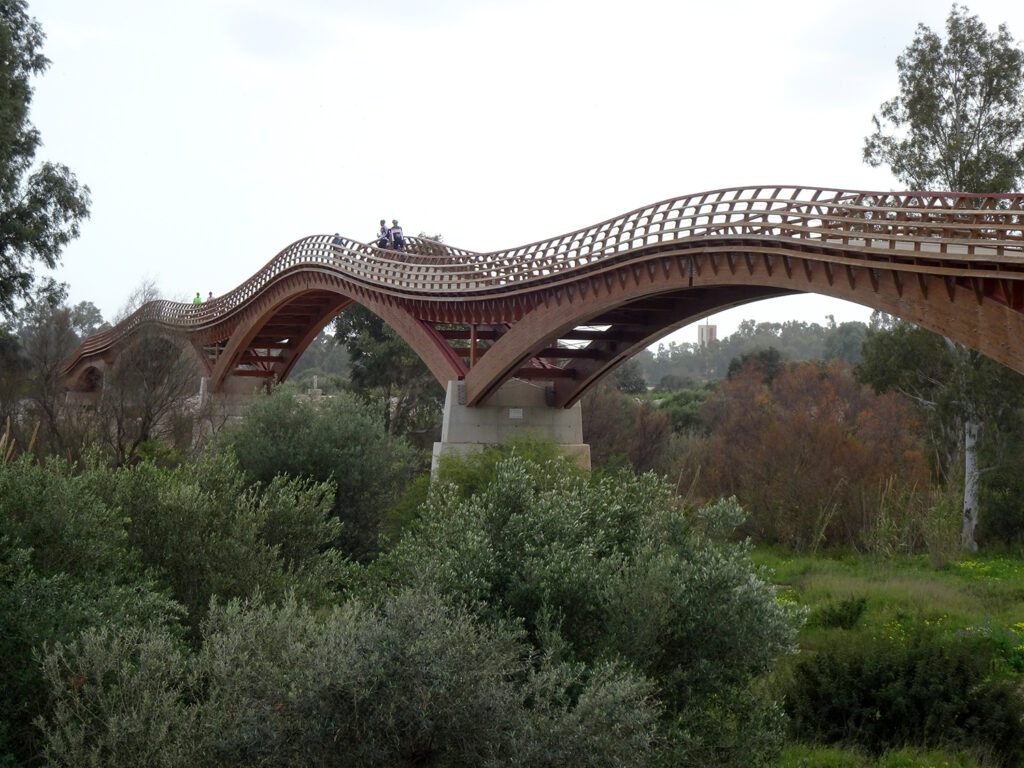
Wooden footbridge crossing the Guadalhorce River and Nature Reserve.

“Wet and wild” weather.

Between the news and the weather gods, we are more than ready to come home.

The weather has not been kind to us lately; cloudy and overcast in Malaga since the beginning of February, “wet and wild” as the weather forecasters put it. A cold front has settled across the country, bringing storms in from the west and north. Towns west of here along the Costa del Sol have been battered with heavy rains and flash floods with some parts getting up to 120 mm in less than 24 hours.

It’s been raining steadily in La Cala del Moral since Friday night, what the weather forecasters are calling “persistent” rain. On the positive side, the reservoirs serving Andalusia are already the highest they’ve been in the last three years with enough water to alleviate the drought.

The Guadalhorce Nature Reserve

Last weekend we drove down the coast to the other side of Malaga city, Malaga oeste (west), to visit the Guadalhorce Nature Reserve and estuary located between Malaga and Torremolinos.

It’s part of my mission to walk as much of the Malaga Coastal Path as possible, one section at a time. The Coastal Path is a 180 km network of seaside promenades, boardwalks and trails stretching along the coast of Malaga from one end of the province to the other. Over the years we’ve been coming to Malaga, we’ve made a point of visiting each of the towns along the coast and walking along their seaside promenades.

The last time we were here, in 2023, we drove down to Estepona to find the start of the trail along the western border. This year I wanted to find the section linking the town of Torremolinos to Malaga which, according to my research, cuts through the Guadalhorce River estuary and nature reserve.

The Guadalhorce is the main river serving the province of Malaga, flowing 154 km from its source in the mountains down to the Mediterranean Sea. The nature reserve was created in 1989 and covers 67 hectares along the Guadalhorce River estuary, a key migratory route for birds flying between Europe and Africa. The estuary is known for its birdwatching, ranked second in Spain for the number of species taking refuge there.

The day we went was overcast and cloudy, but pleasant. We parked in an old industrial neighbourhood that is now being re-developed into residential housing and walked across the sand to the start of the trail leading into the nature park.
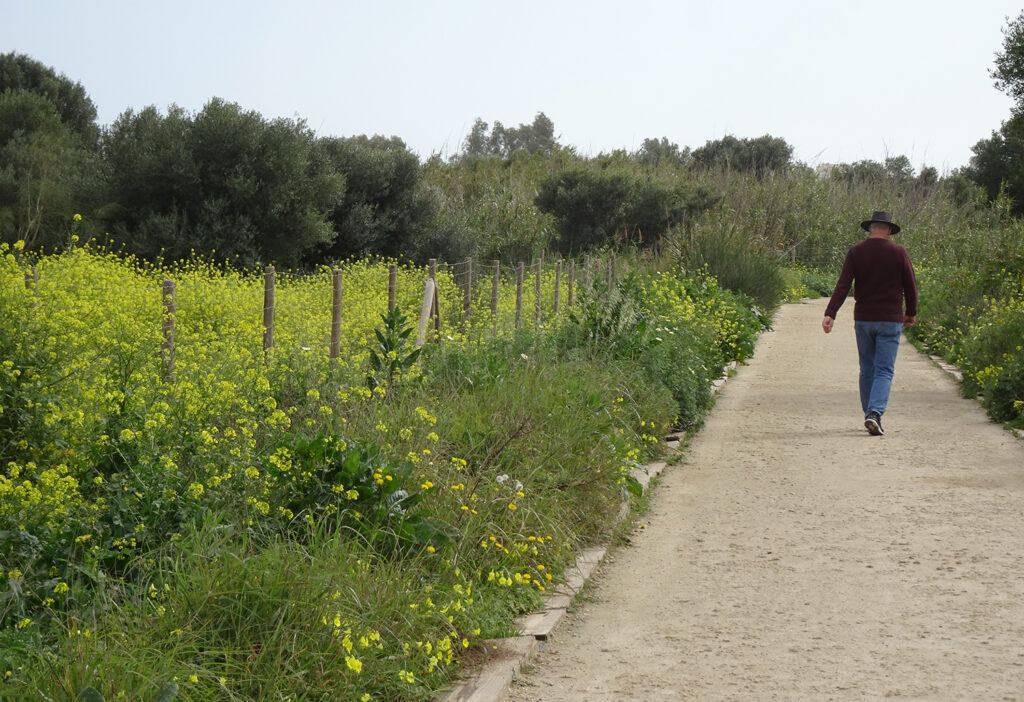
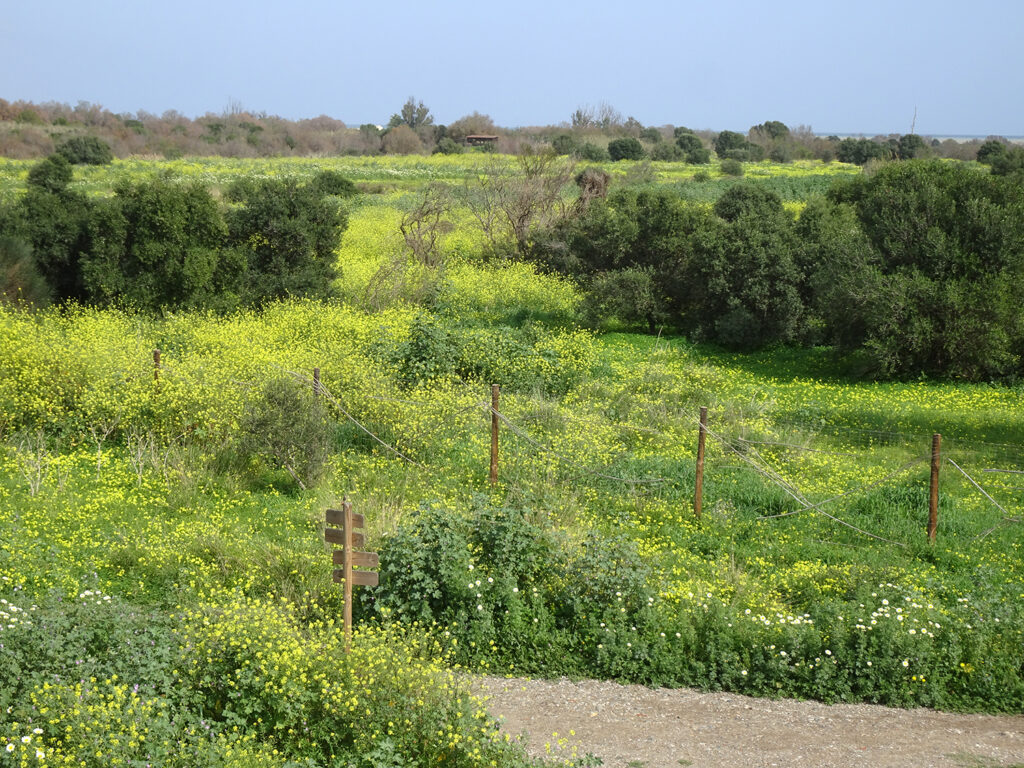
Main trail through the Guadalhorce Nature Reserve, part of the Malaga Coastal path.

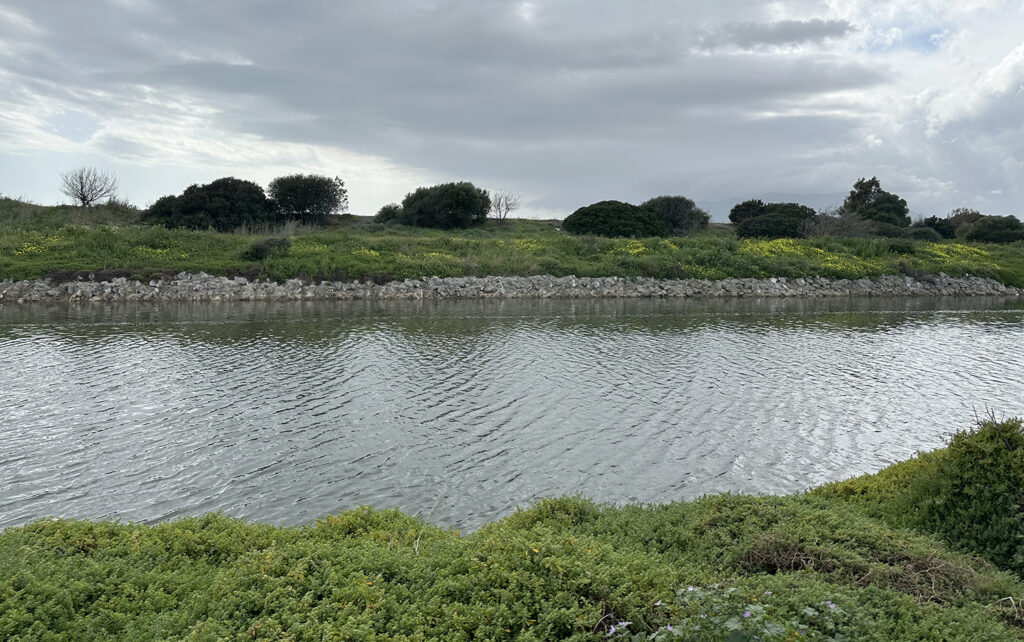
View across the estuary to one of the scenic lookouts.

There are at least five “observatorios” or observation decks in the nature park for bird watching, wildlife viewing and picture-taking.
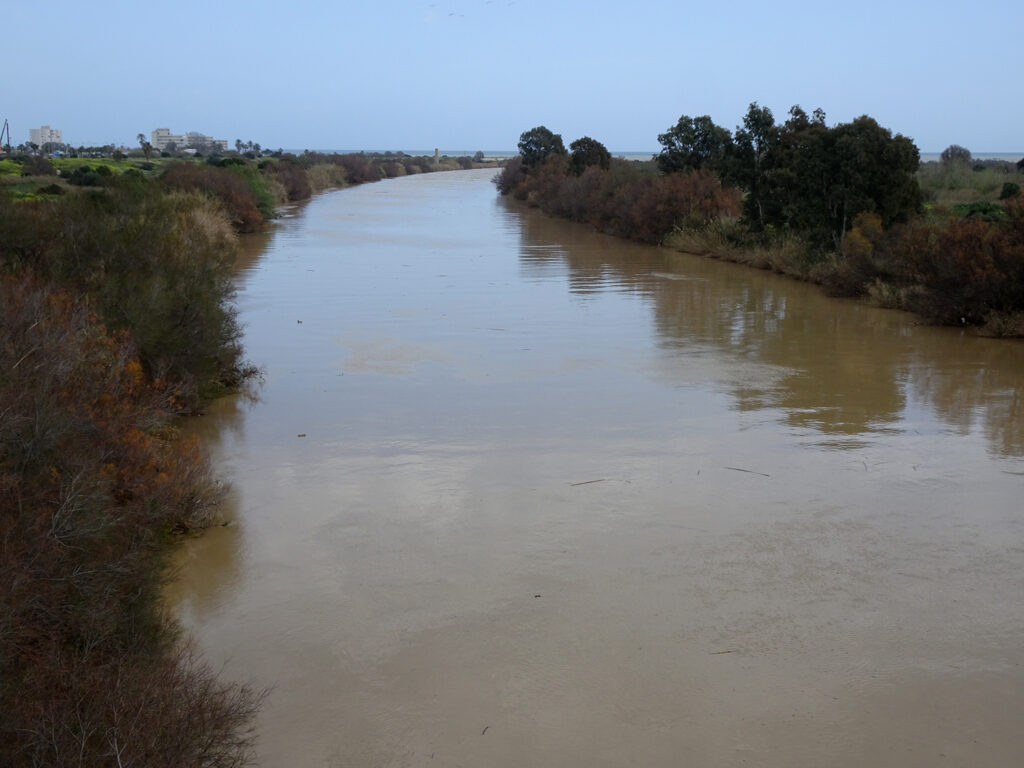
Another one of the channels that was built to help divert the river and minimize flooding.

Once the Guadalhorce River reaches the estuary, it is divided into two main channels – Rio Viejo, the old river, and Guadalmar, named after the nearby beach.
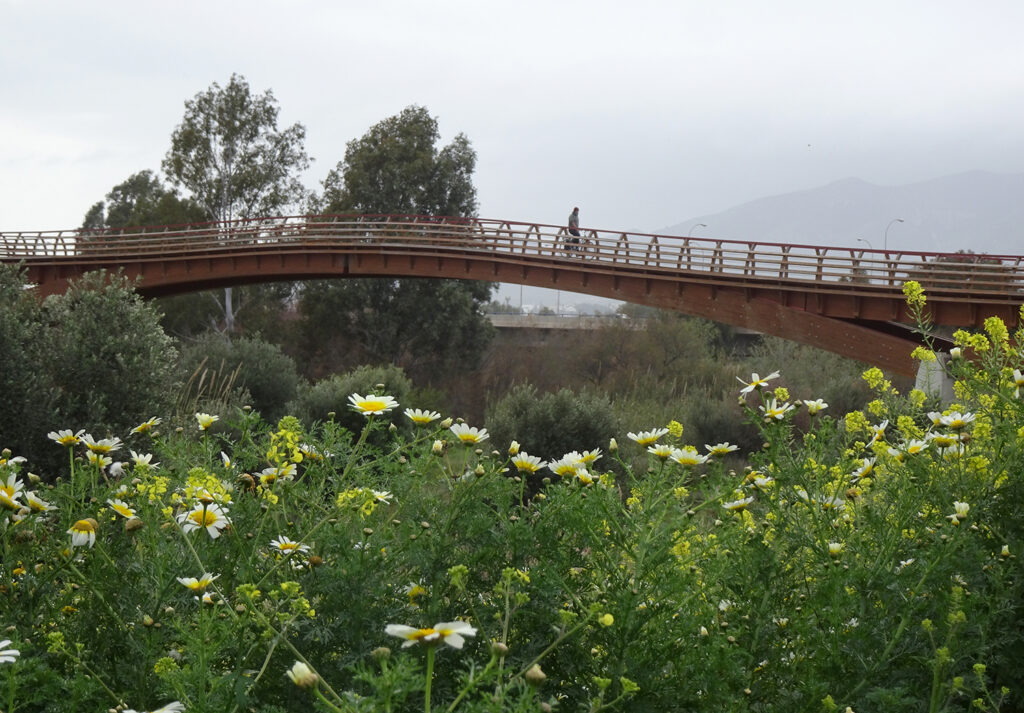

My favorite part of the walk was the wooden bridge which you can see from the main highway. I love the way it curves as it crosses the estuary. At 270 meters, it is reported to be the longest wooden footbridge in Europe. The bridge opened in September 2020, making it possible for people to walk or cycle between Torremolinos and Malaga.
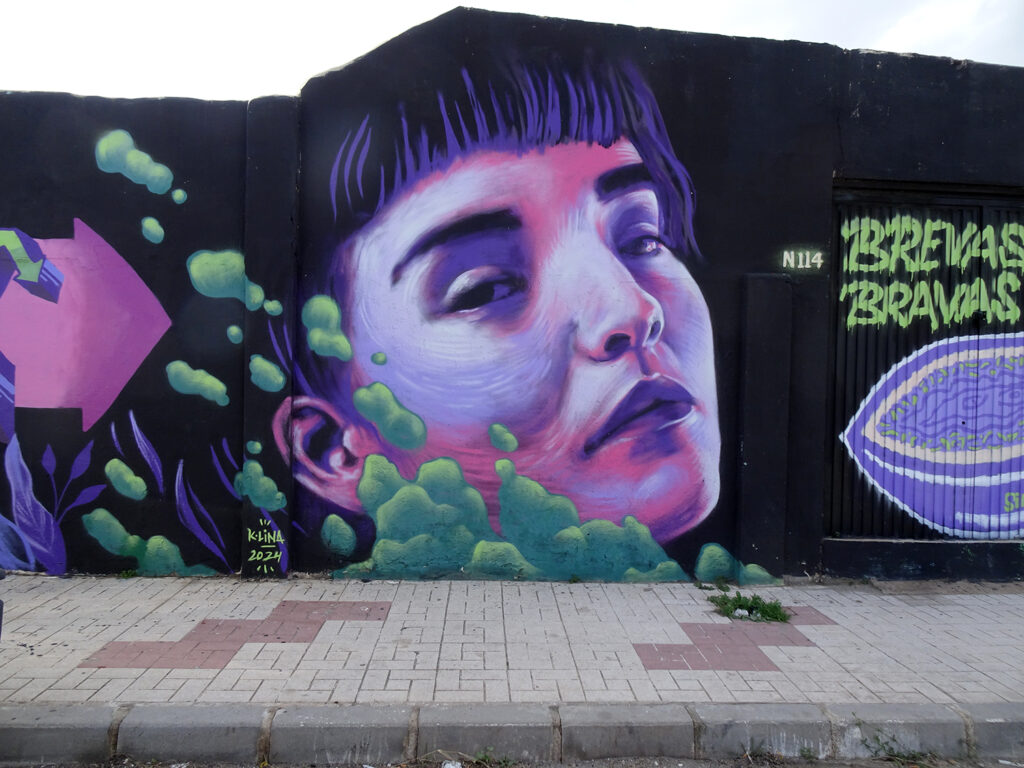

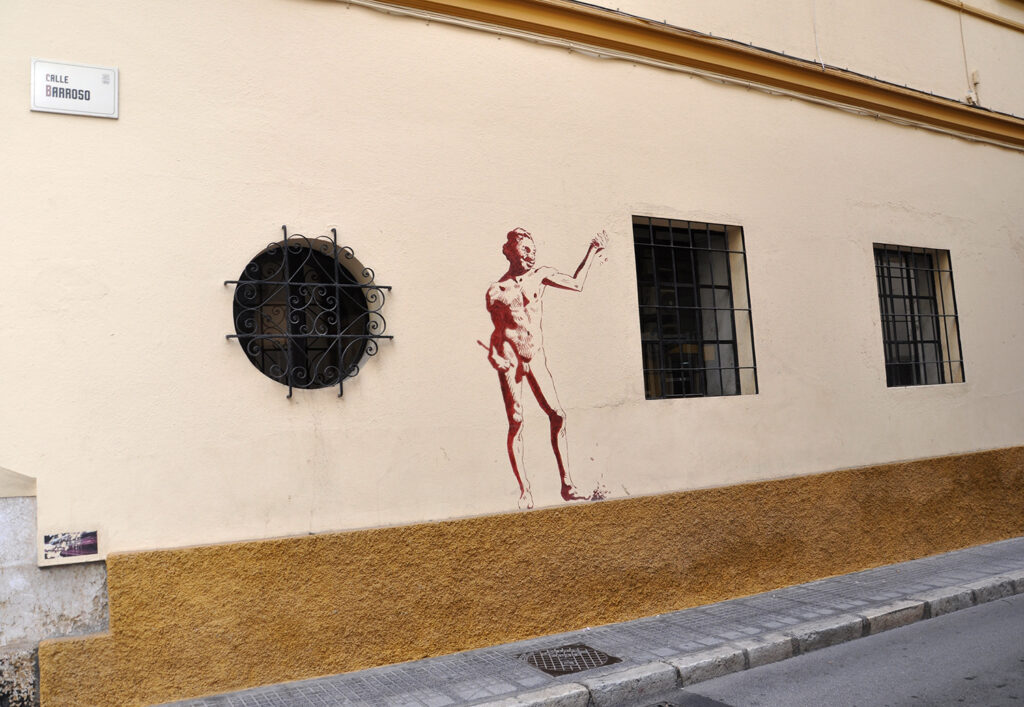
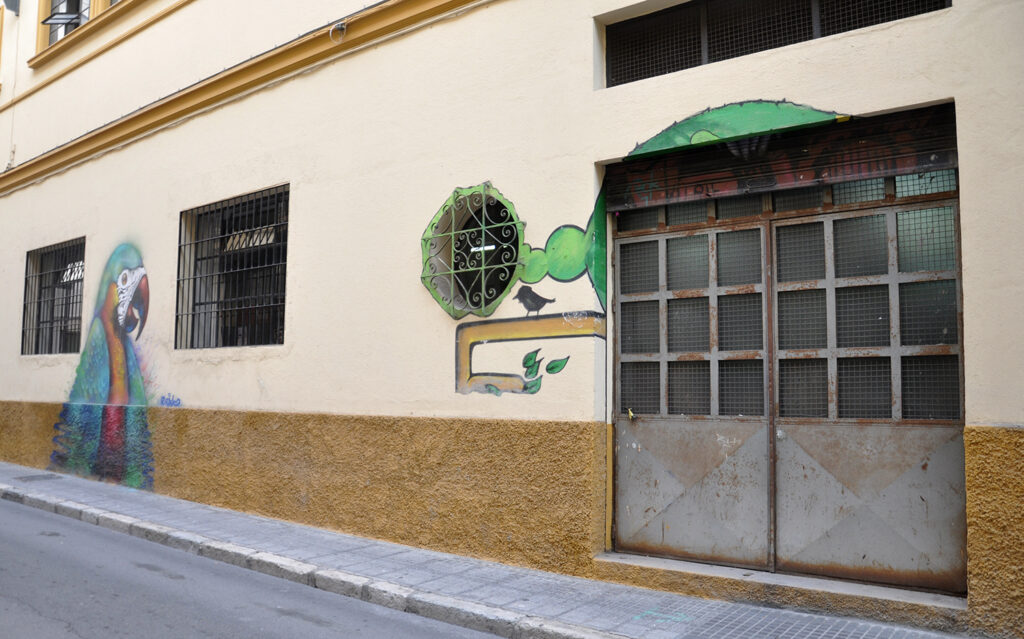
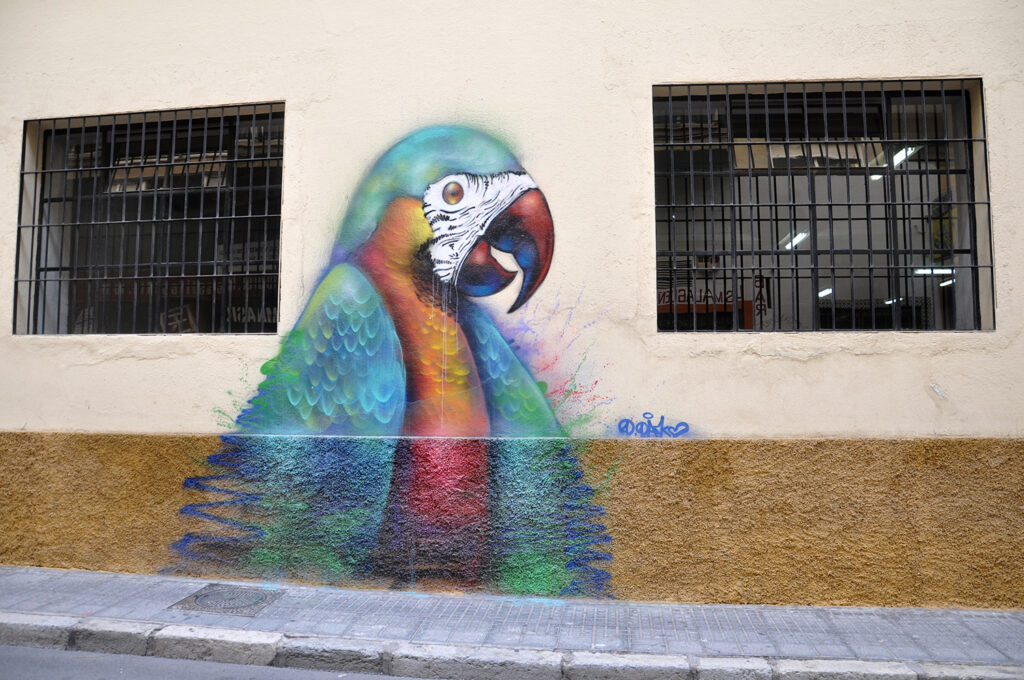
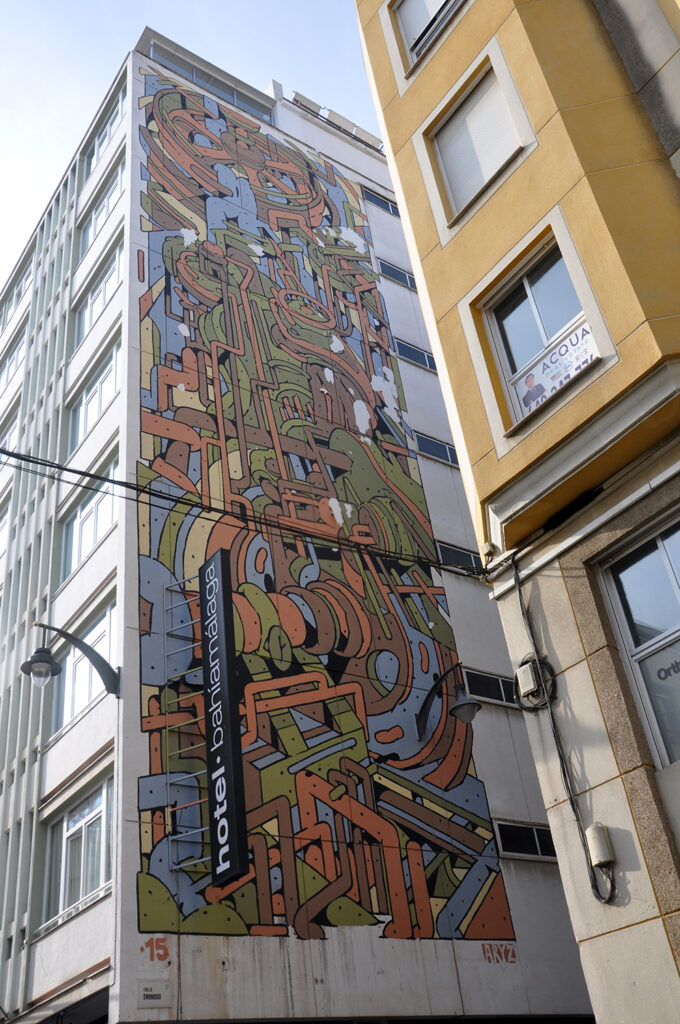
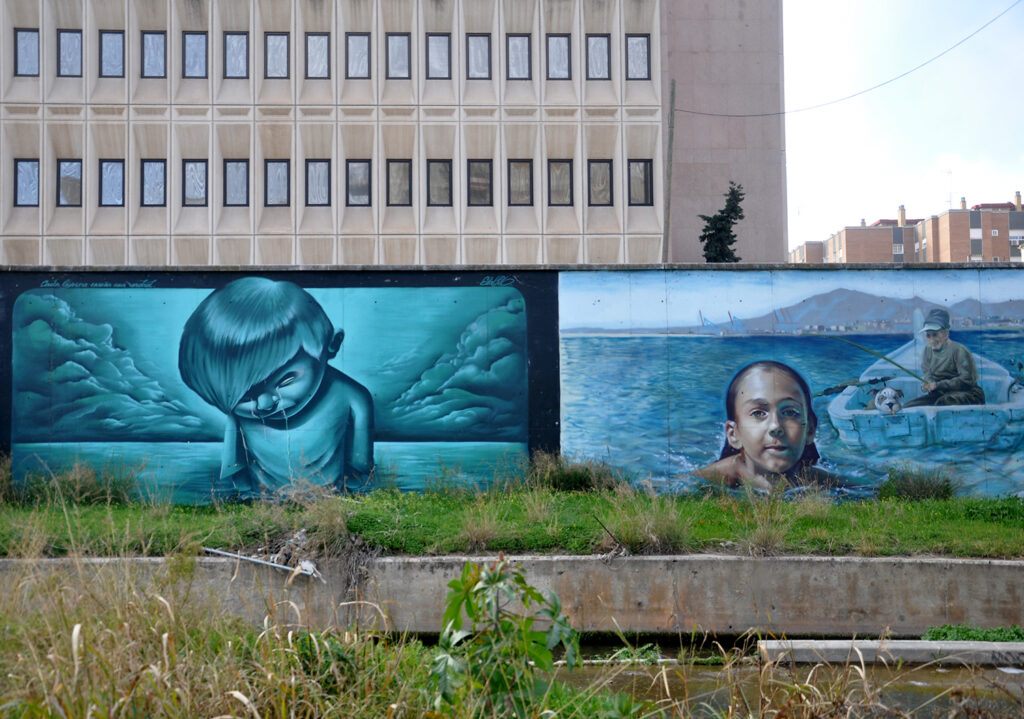
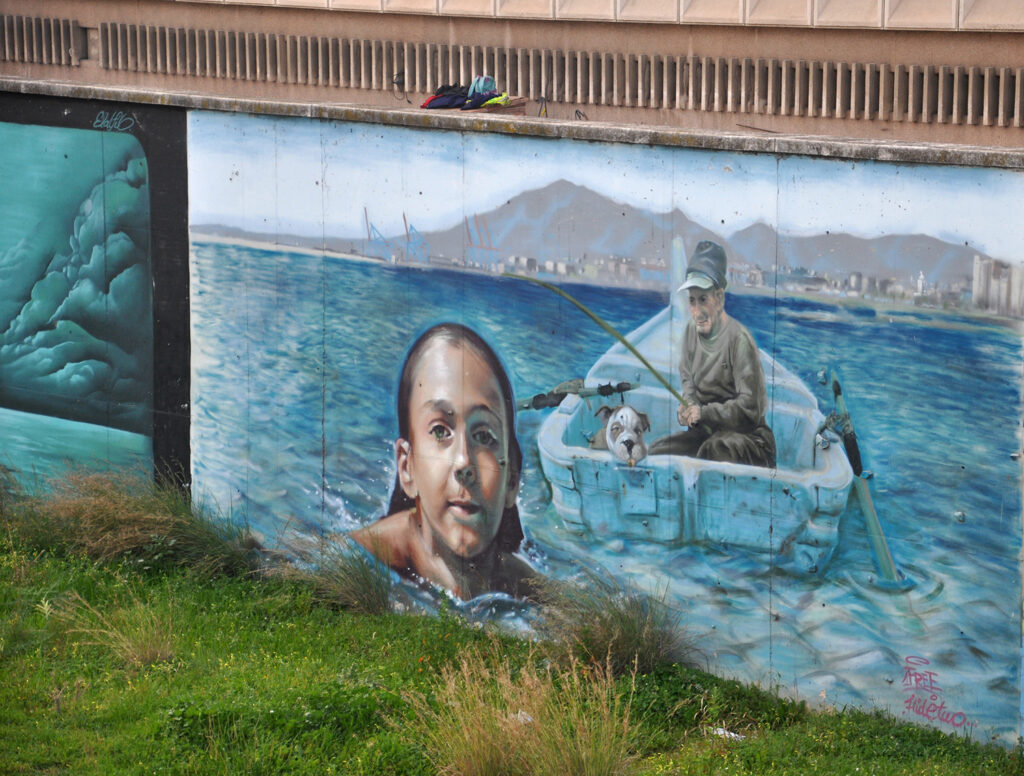
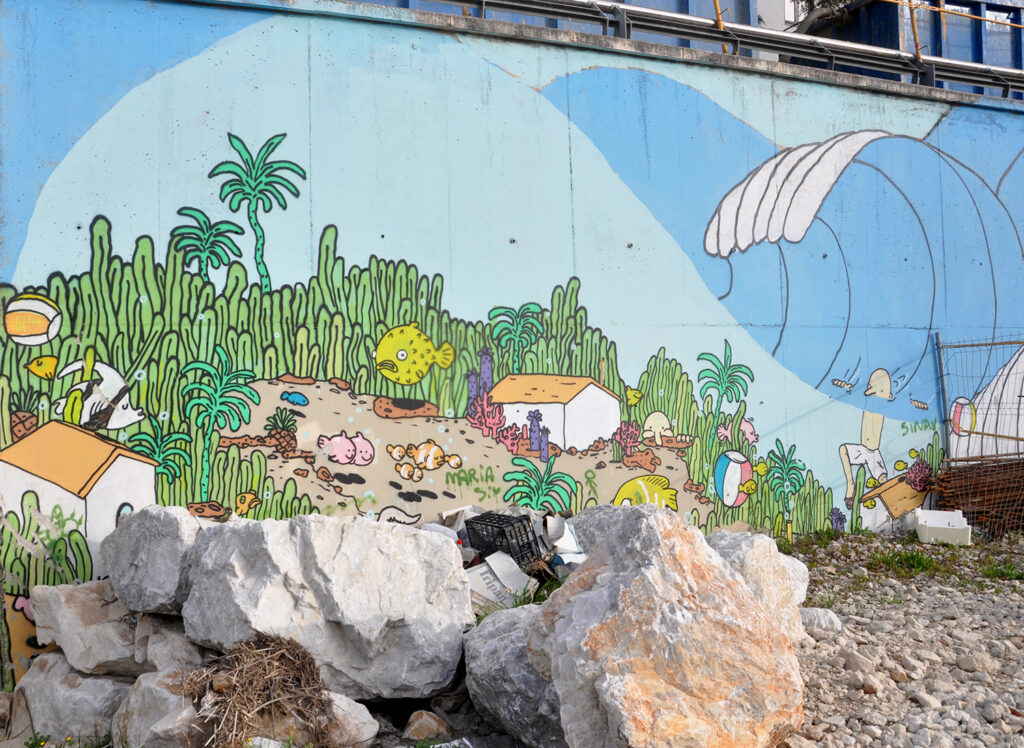
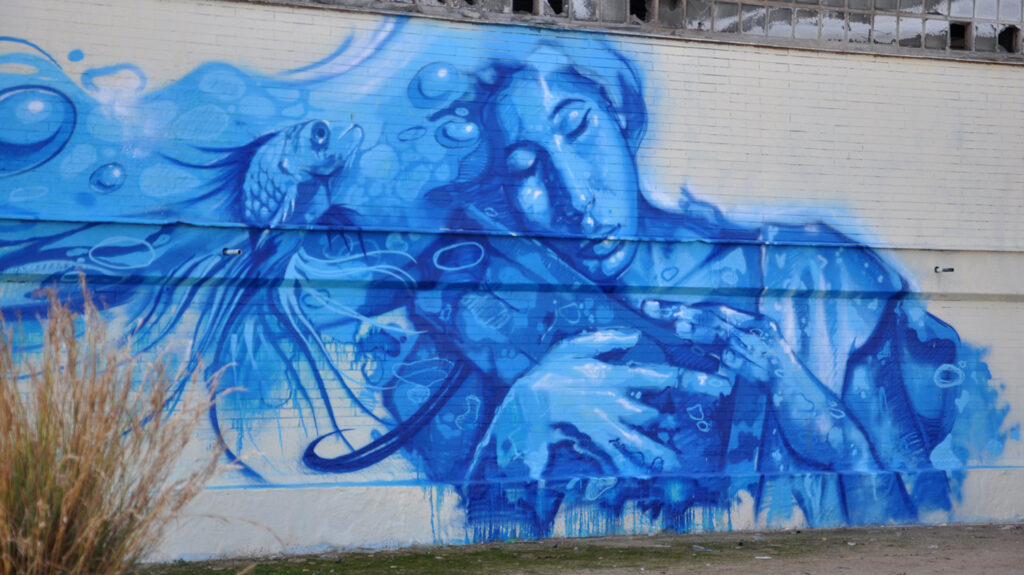
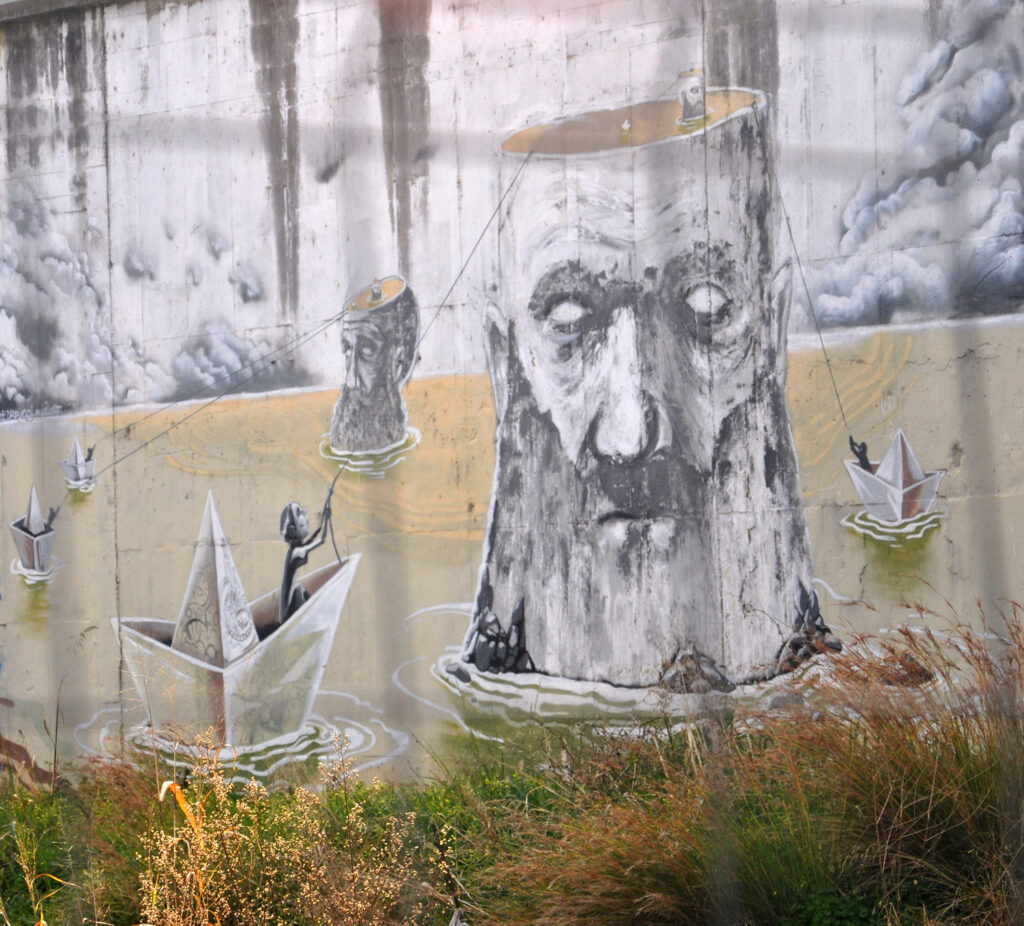
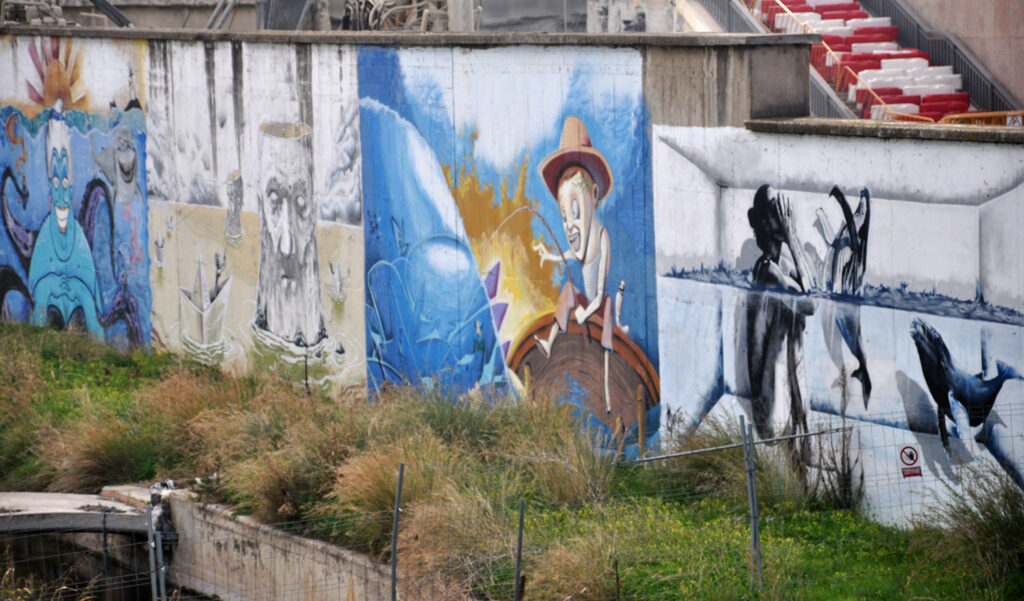
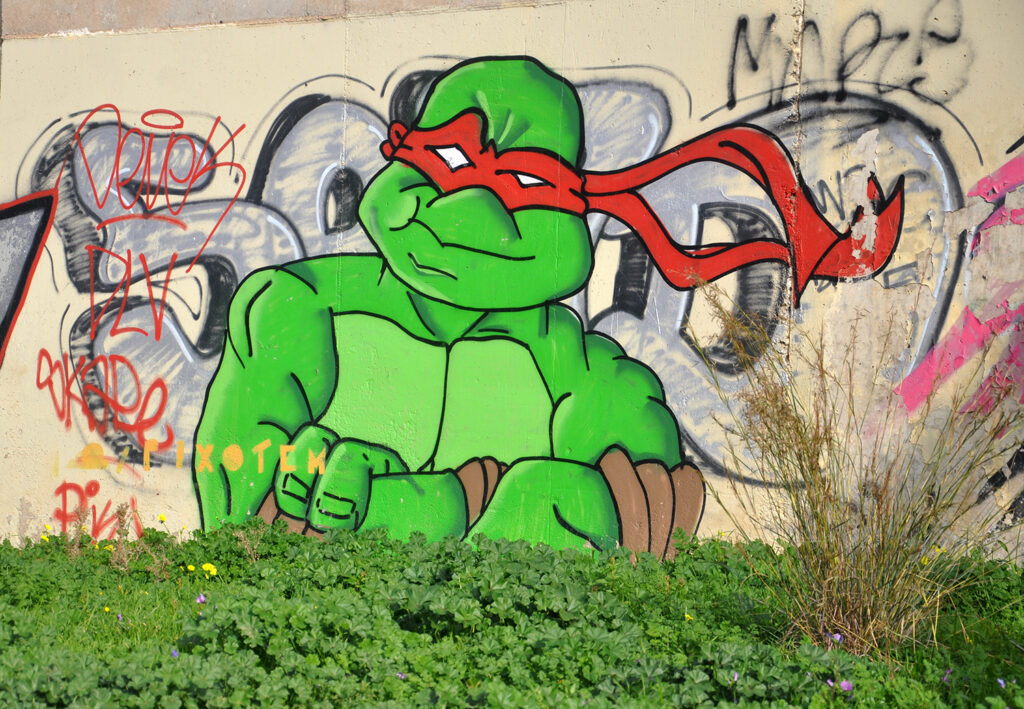
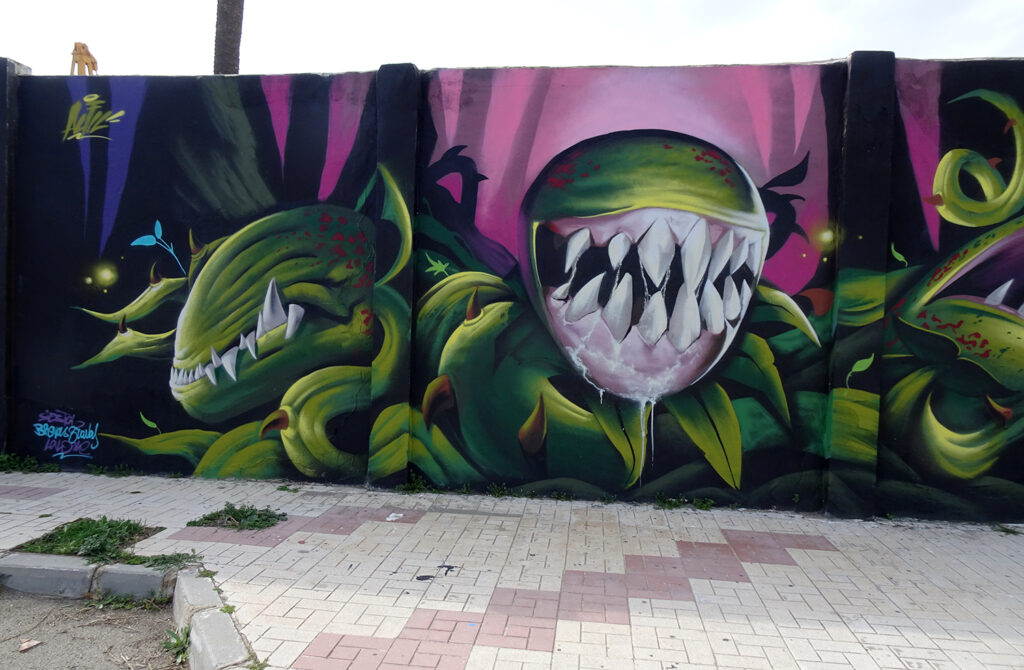
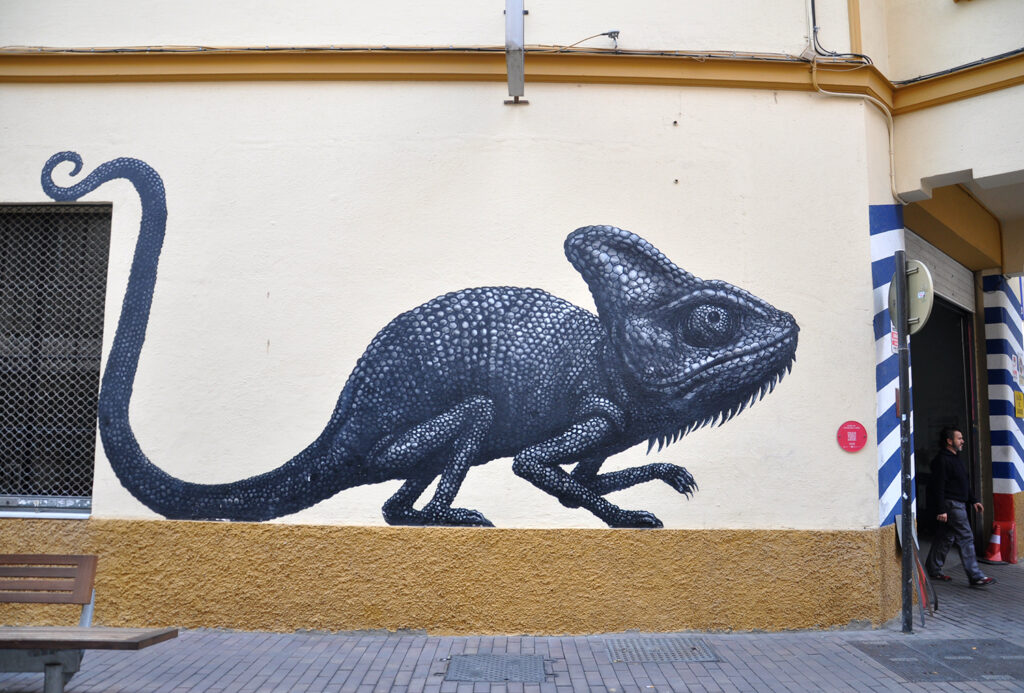
And I couldn’t leave without adding a couple of murals from where we started. There are more than a dozen murals here, painted on the concrete walls, all that remains of the once thriving industrial park.
Filed Under: Uncategorized

Street Art in Malaga, Part 2

February 26, 2025 By Laurie Jones

The devil, as they say, is in the details.

More street art from Malaga, and an update.

In between organizing four years’ worth of photos from our trips to Spain, I’ve been researching information about Malaga’s graffiti and street art scene. It turns out that the murals along the Guadalmedina riverbed, as shown in the photos that I posted yesterday, were not part of the Soho Malaga project as I’d originally thought. The Guadalmedina murals were created as part of a contest called Guadalmedina, The River That Unites Us (El río que nos une), which is in turn part of a larger urban renewal initiative to beautify Malaga’s old buildings and neighbourhoods through graffiti art.

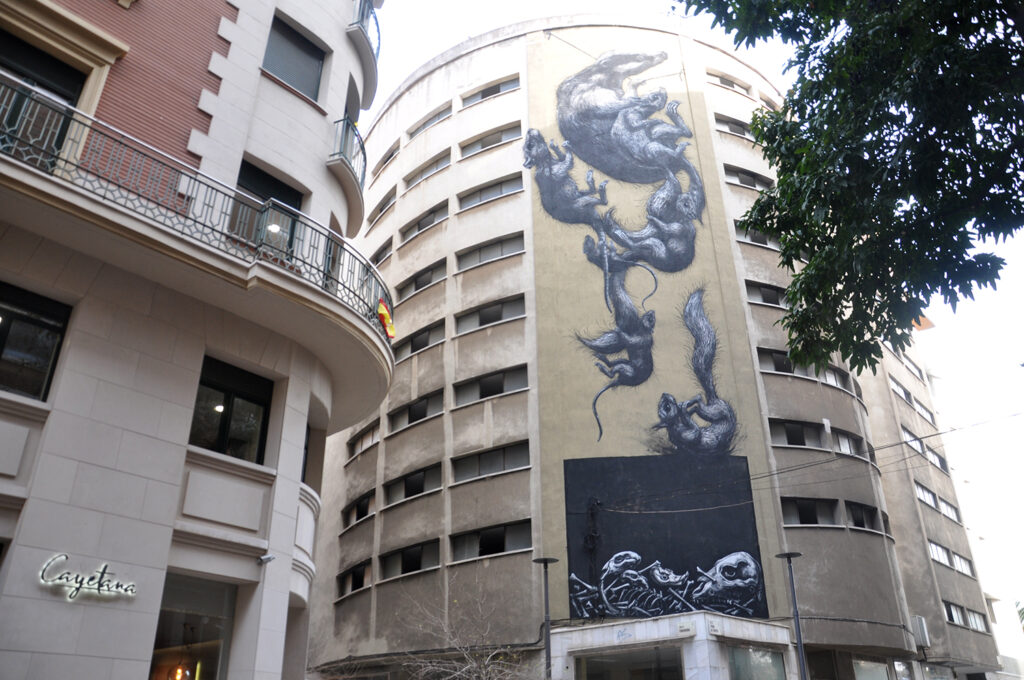
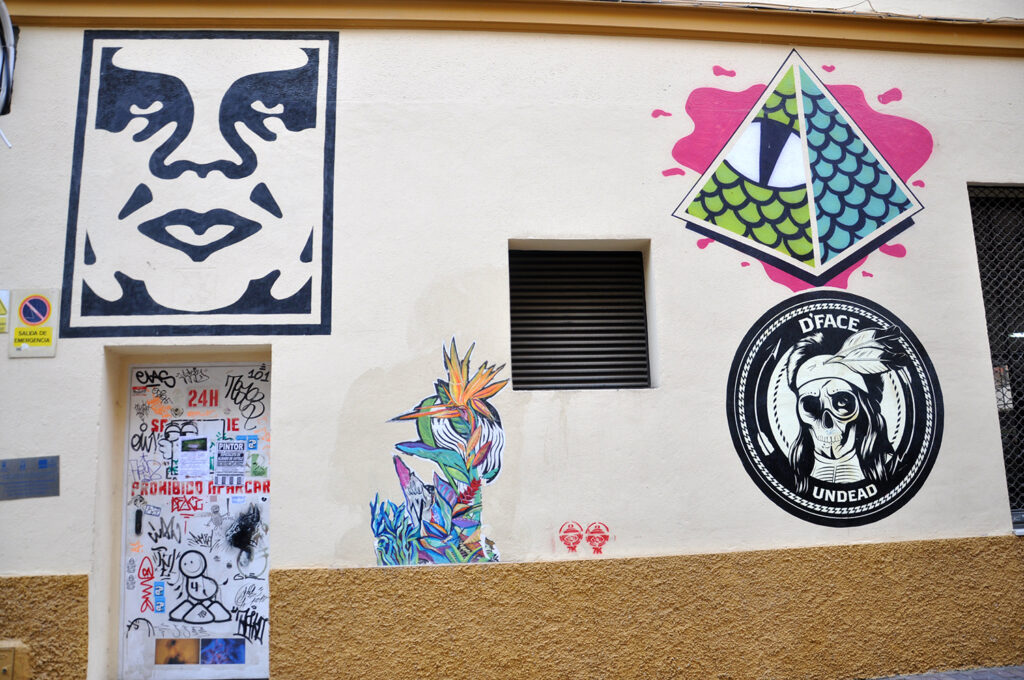
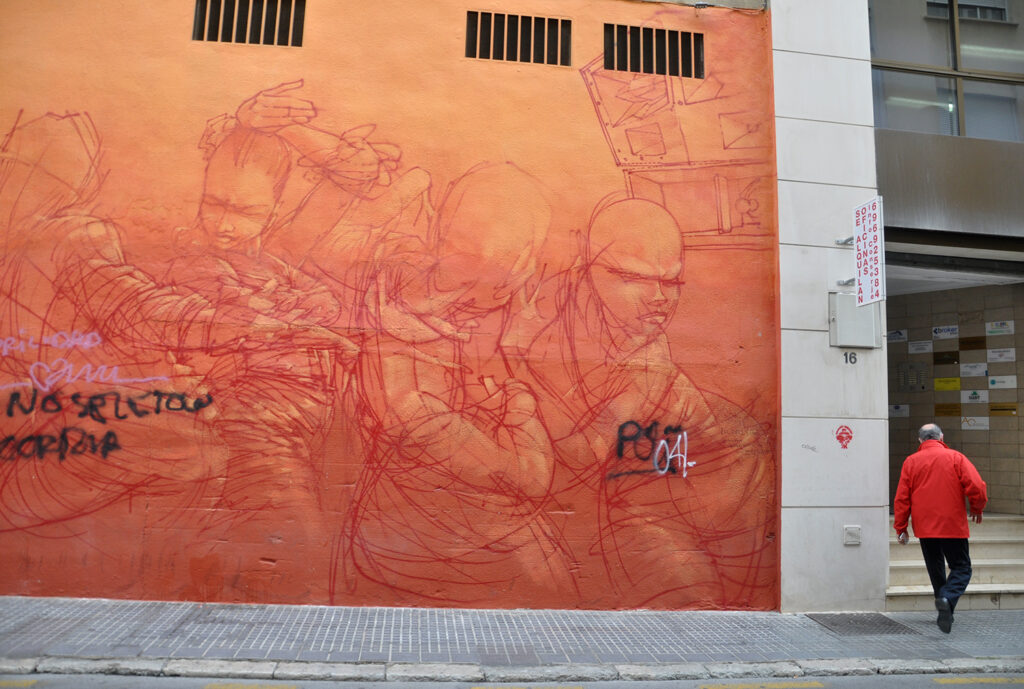
The photos I’m posting today are of murals that were also created as part an urban renewal initiative, this one focused on transforming Malaga’s rundown port district into an arts and cultural centre. One of the highlights was the Urban Art in Soho Malaga (Malaga Arte Urbano Soho) project, also known as MAUS. In 2013, it commissioned internationally renowned street artists from around the world to come to Malaga and turn the streets into an open-air gallery. A second edition was held in 2015, and new works have been added since then.

Today, there are urban art initiatives in all 11 neighbourhoods of Malaga, with guidebooks and maps featuring the murals and artwork of each neighbourhood.

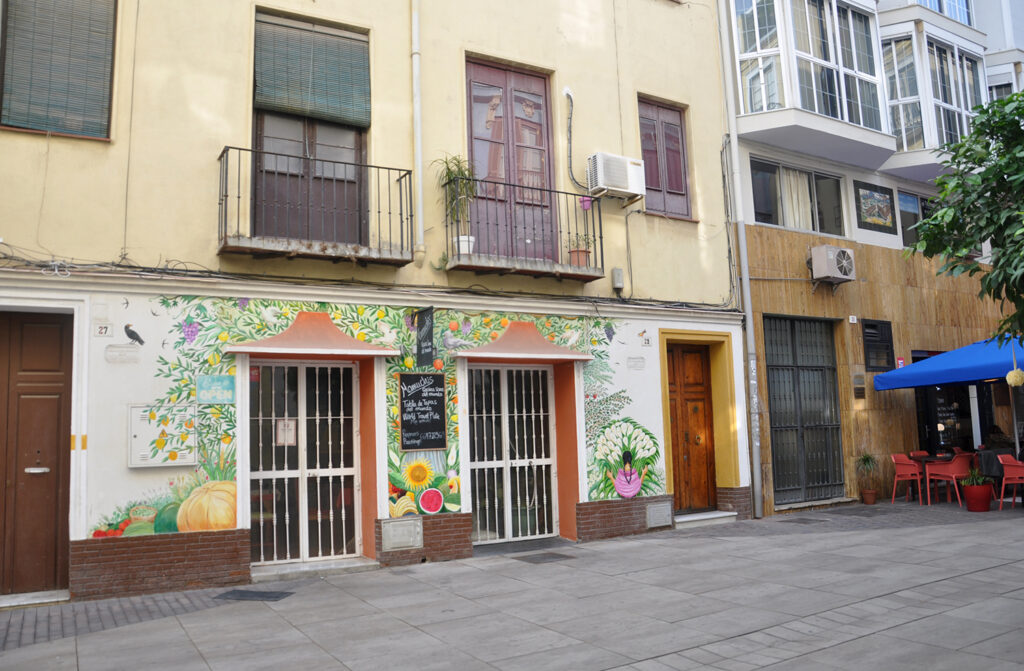
Here is a selection of photos from the Soho Malaga district that I took in January 2018.


Filed Under: Uncategorized

Street Art in Malaga, Part 1

February 25, 2025 By Laurie Jones

Painted mural on the walls of the Guadalmedina River in Malaga. Laurie Jones photo.

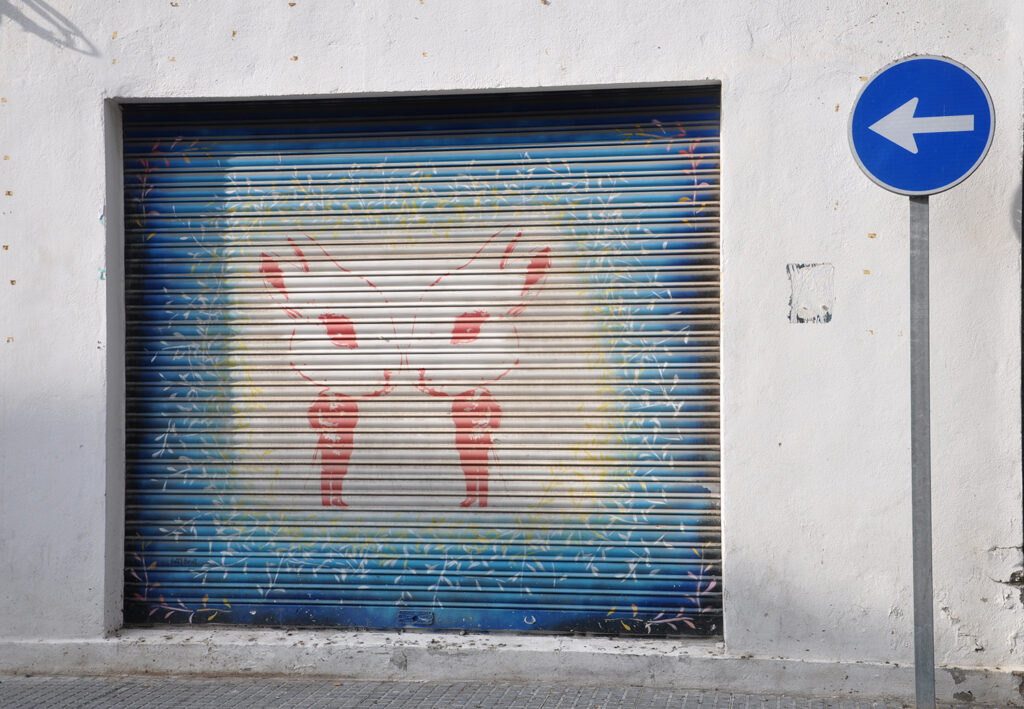
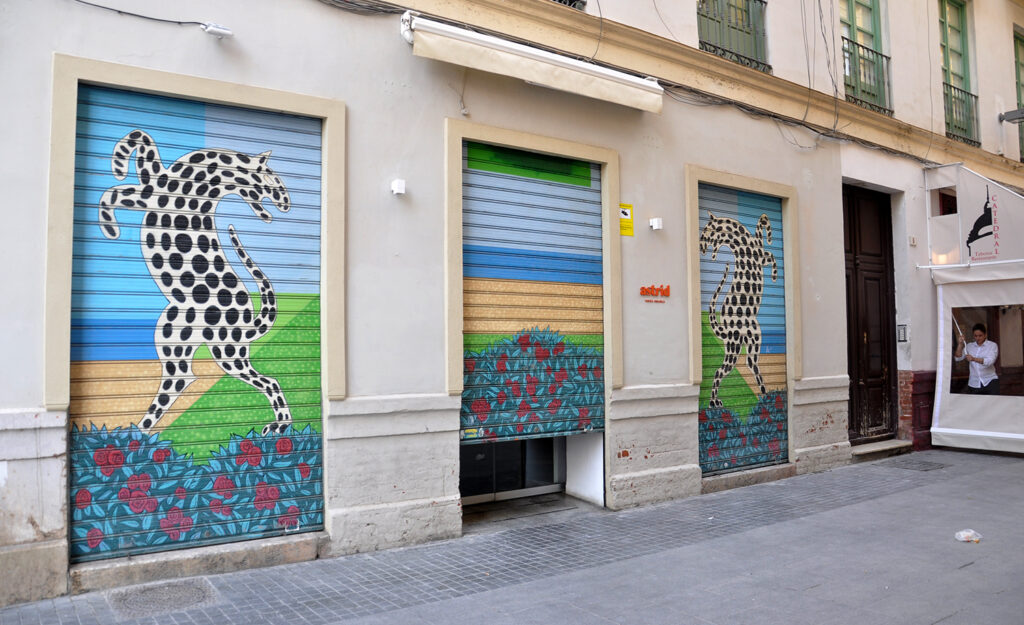
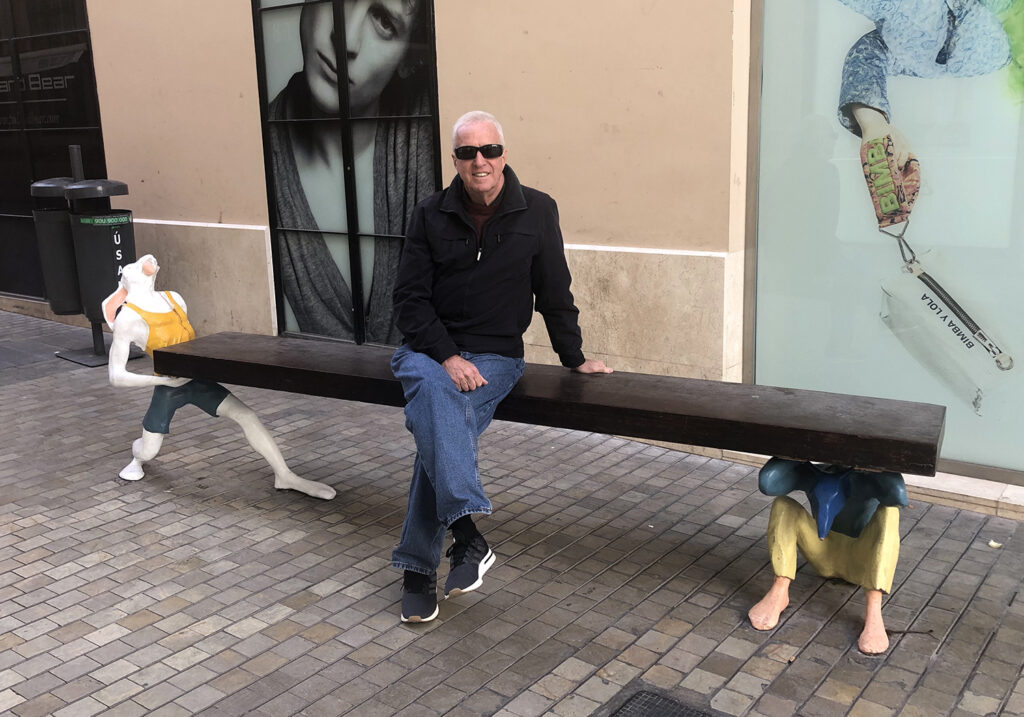
Public art is everywhere in Malaga. Not just formal statues honouring historical figures and events, or the religious paintings and frescos found in churches and mosques. There are sculptures by well-known artists scattered throughout the parks and main boulevards. Modern art installations along the seaside promenades. Street art and wall murals painted by graffiti artists from around the world. Whimsical benches and bicycle racks and drinking fountains. Yes, whimsical. See photo below.

Ron sitting on a bench on Calle Larios in Centro Malaga. Laurie Jones photo.

And it’s not just Malaga. Every town has some form of public art. Even the playground across the street from our townhouse in La Cala del Moral has an artistic touch, the fencing around it painted in bright colours like a box of crayons.

I discovered the street art during our first trip to Malaga in 2018. Ron had to fly back to Canada for meetings, leaving me to explore the city on my own for a few days. We were only here for two weeks, so I wanted to make the most of it, setting out from our apartment each day, camera in hand, on a mission to make the city my own, one neighbourhood at a time.

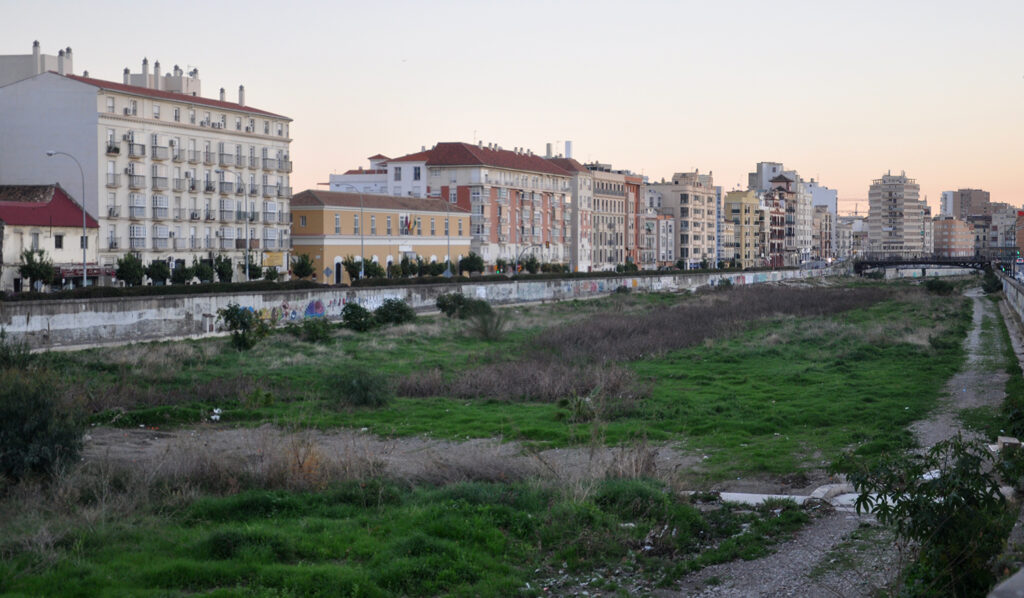
I walked everywhere, using the Guadalmedina River to orient myself. It runs through the middle of Malaga, dividing the city in two – the harbour and historic centre on the east bank, the more modern city on the west. The river is dry most of the year and concrete canals have been built along the riverbed to divert any water that might collect from rainstorms and flooding.

Half the fun of street art is the unexpectedness of it, the thrill of turning a corner and stumbling across a colourful mural or painted door covering. That first day, or maybe it was the second, I followed the Guadalmedina down towards the mouth of the river where the concrete walls were covered with what looked like a haphazard collection of words and signatures layered on top of each other – typical graffiti tagging.

Looking down the dry riverbed of the Guadalmedina River towards the mouth of the river. Laurie Jones photo.

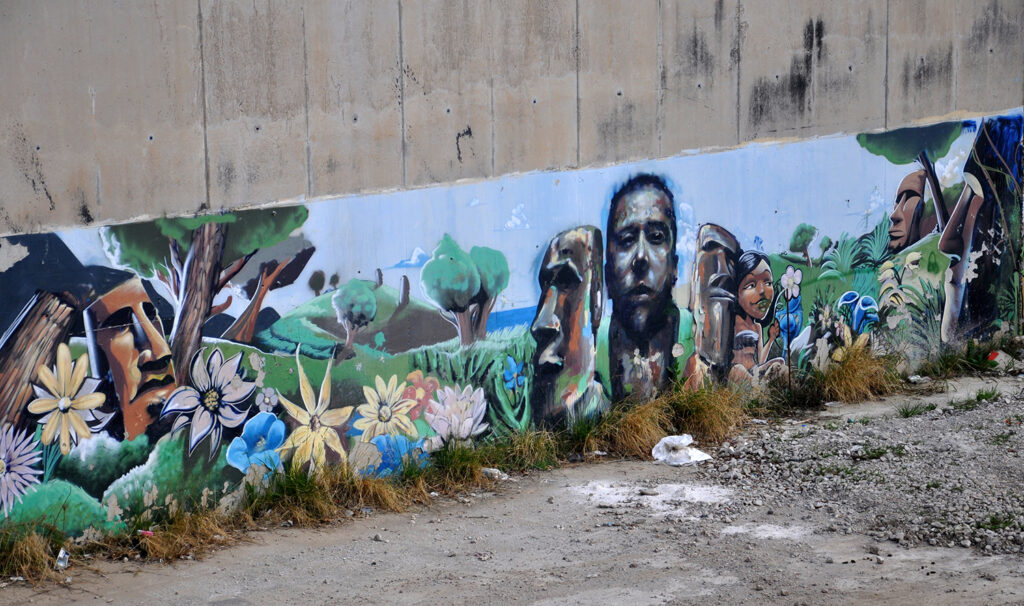
It wasn’t until I got closer that I saw the murals tucked between the tagging. Beautiful scenes and images that felt organized, more than simply random paintings by unknown street artists. I felt like I had stumbled on a secret garden, hidden among the brambles.

This wasn’t like a formal art gallery, each picture displayed separately in its own frame. The paintings were squished together on the concrete walls rising out of the rubble of a neglected riverbed, overgrown with weeds. It was just me and a couple of people walking their dogs, a work crew repairing some stairs further down.

I learned later that the murals had been created as part of an initiative to transform Malaga’s port district into an arts and cultural centre. One of the highlights was the Malaga Arte Urbano Soho project, also known as MAUS. In 2013, it commissioned internationally renowned street artists from around the world to come to Malaga and turn the streets into an open-air gallery. A second edition was held in 2015, and new works continue to be added.

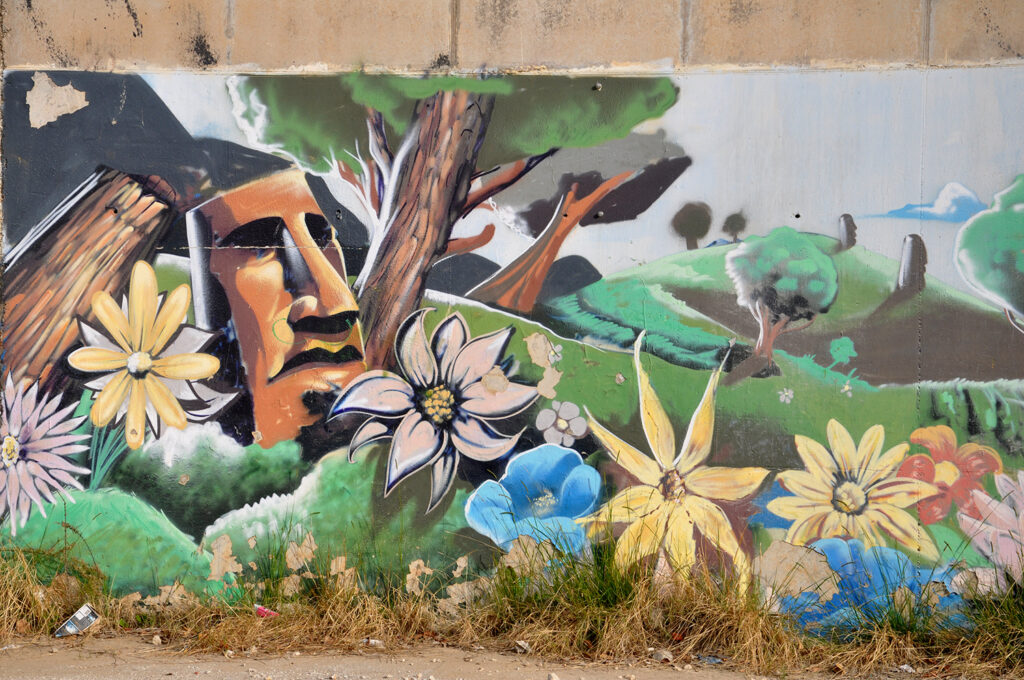
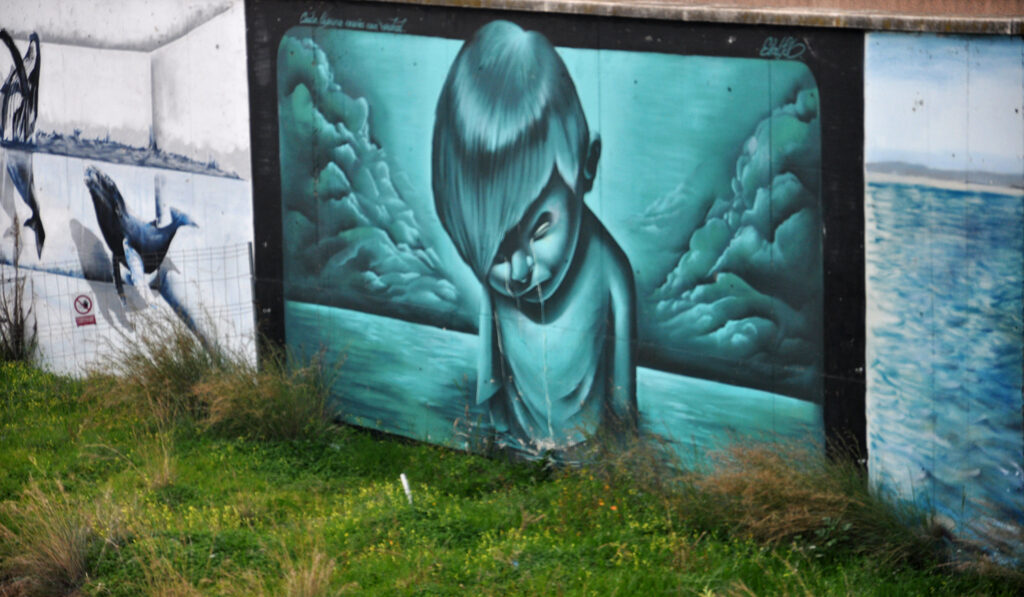
Here are some pictures of the murals that I took on my walks in January 2018. These are from the Guadalmedina River. Tomorrow I will post another batch from the Soho neighbourhood.


Mural by the Spanish street artist Borja Moreno Terrón known as Elalfil (2015). Laurie Jones photo.


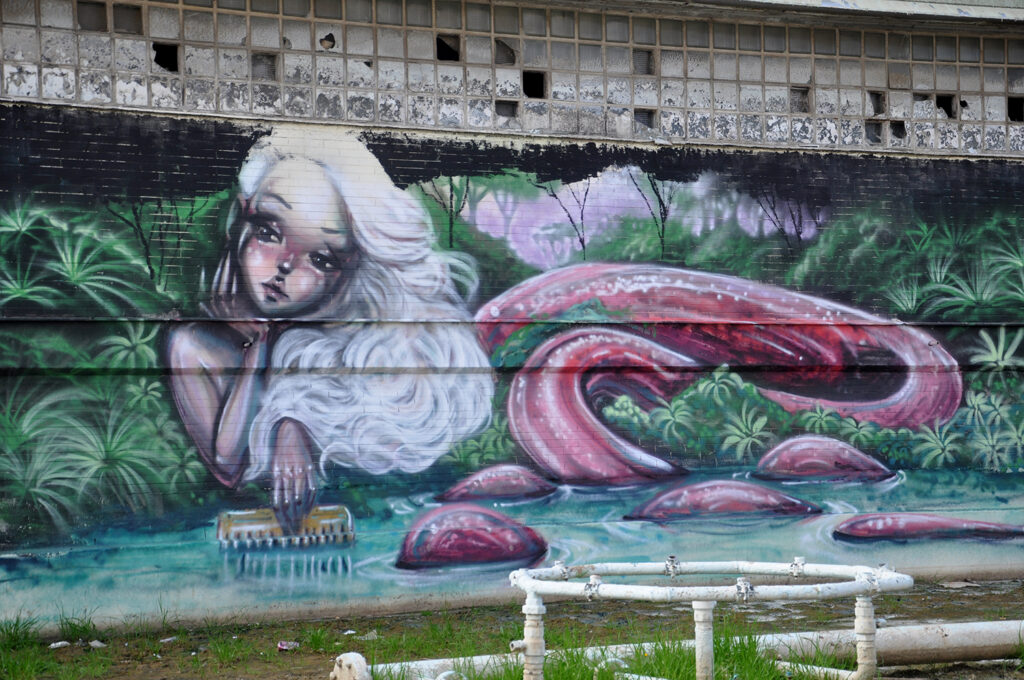
The Girl From the Trunk by artis Hector Socrates Hurtado Requena.


Filed Under: Uncategorized

The Walk of Canadians

February 15, 2025 By Laurie Jones


The Walk of Canadians. A section of the coastal path near where we are staying is dedicated to the memory of Canadian doctor Norman Bethune for his work helping refugees during the Spanish Civil War in 1937.


We’ve been back in Spain since December 13th and there’s a lot to catch up on before we head home on March 10th.

I was going to post some more pictures of our walks along the seawall and day trips along the coast, but then got sidetracked, thinking instead about what’s going on in Canada over the tariffs and how Canadians are coming together to stand up against the United States. Go Canada!


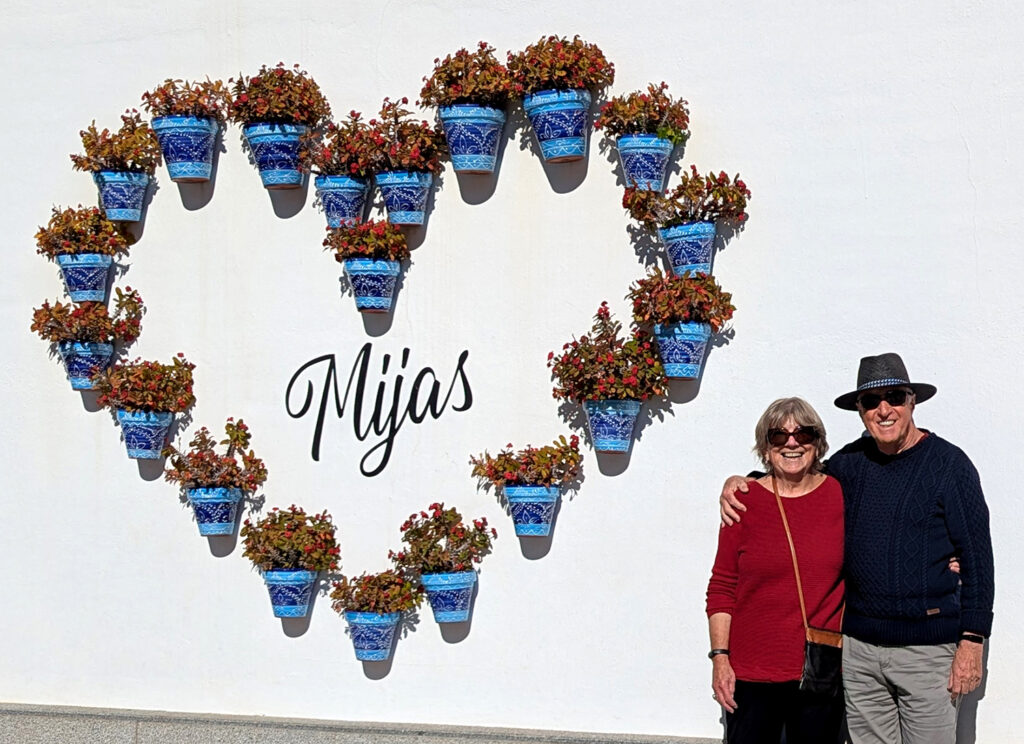
Valentine’s Day in Mijas

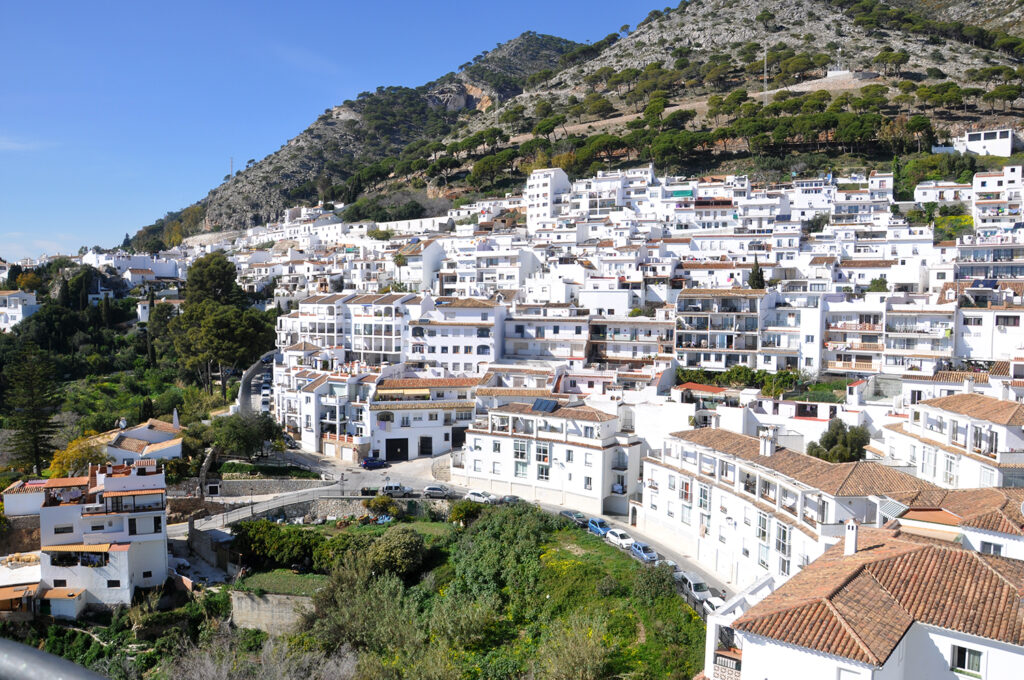
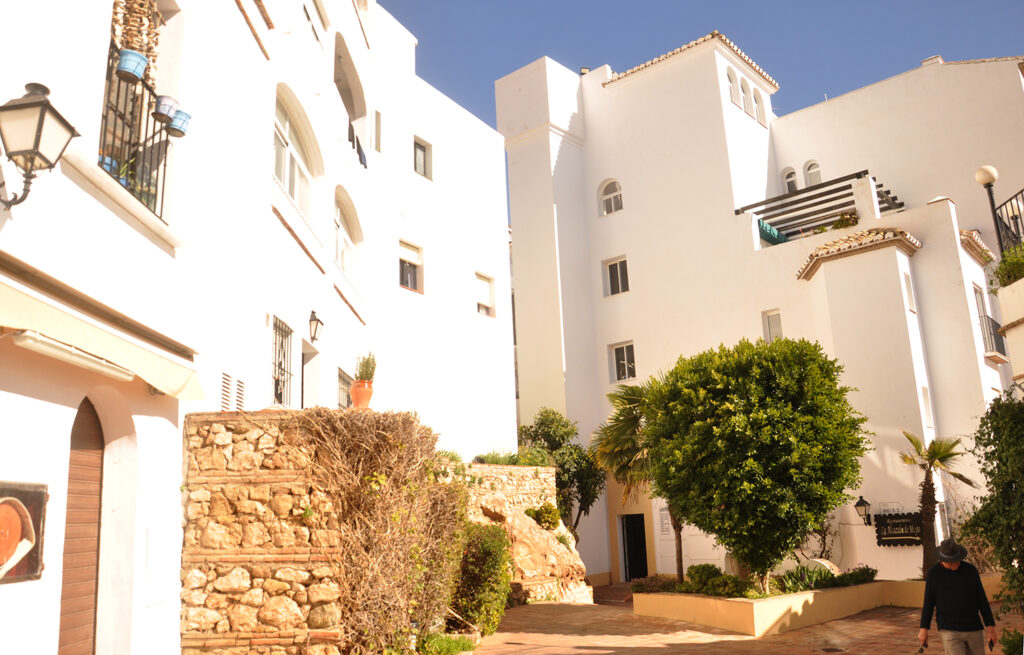
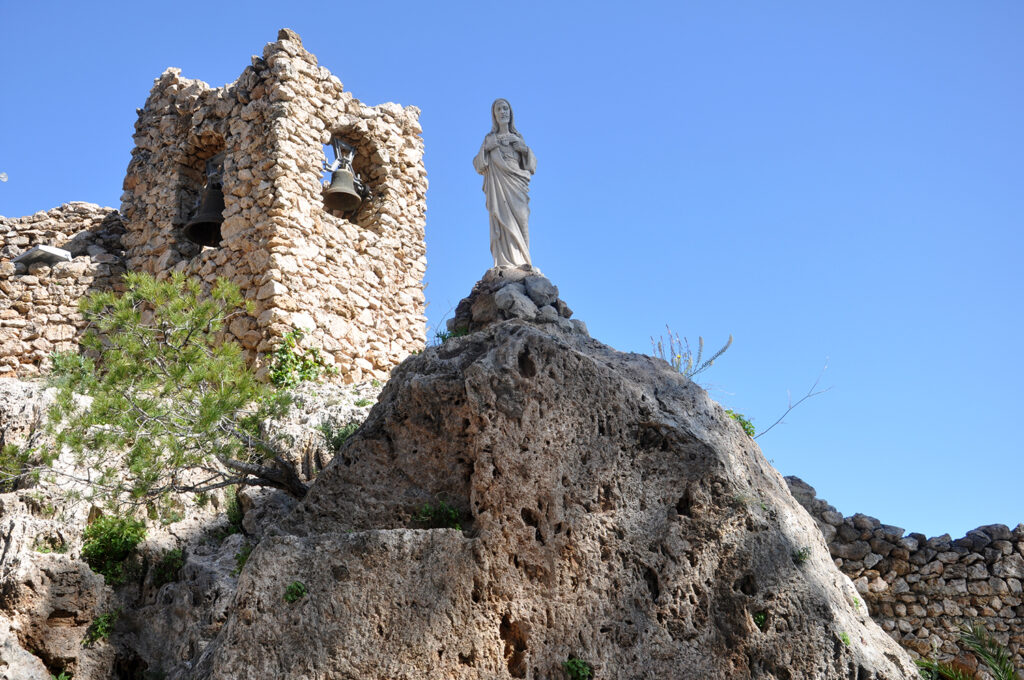
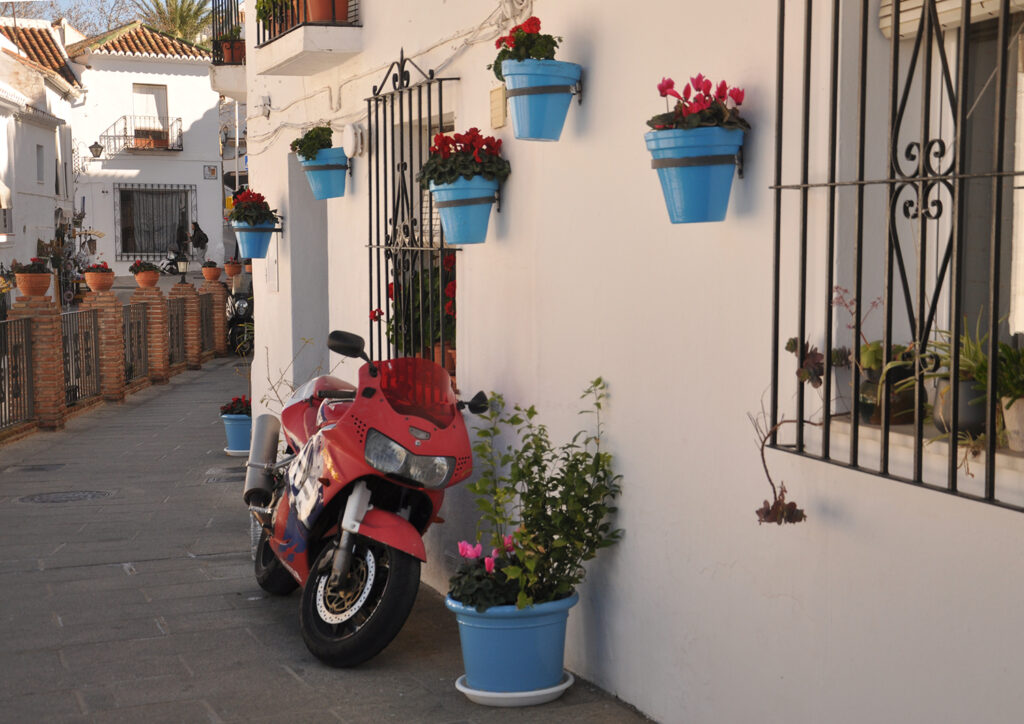
Happy post Valentine’s Day! Yesterday we drove down the coast to Mijas, one of the white pueblo towns in Andalucía that are known for their whitewashed walls, reddish brown tile roofs and narrow, cobblestoned streets. Very picturesque. Here are some pictures that I took yesterday and a couple of years ago.

View looking back on Mijas Pueblo (February 2020)
One of the little squares in Mijas Pueblo (February 2025)
The Chapel of the Virgin of the Rock in Mijas Pueblo (February 2020)
Cobblestone walkway leading to the botanical gardens in Mijas Pueblo (February 2020)
Celebrating Valentine’s Day in Mijas (February 2025)

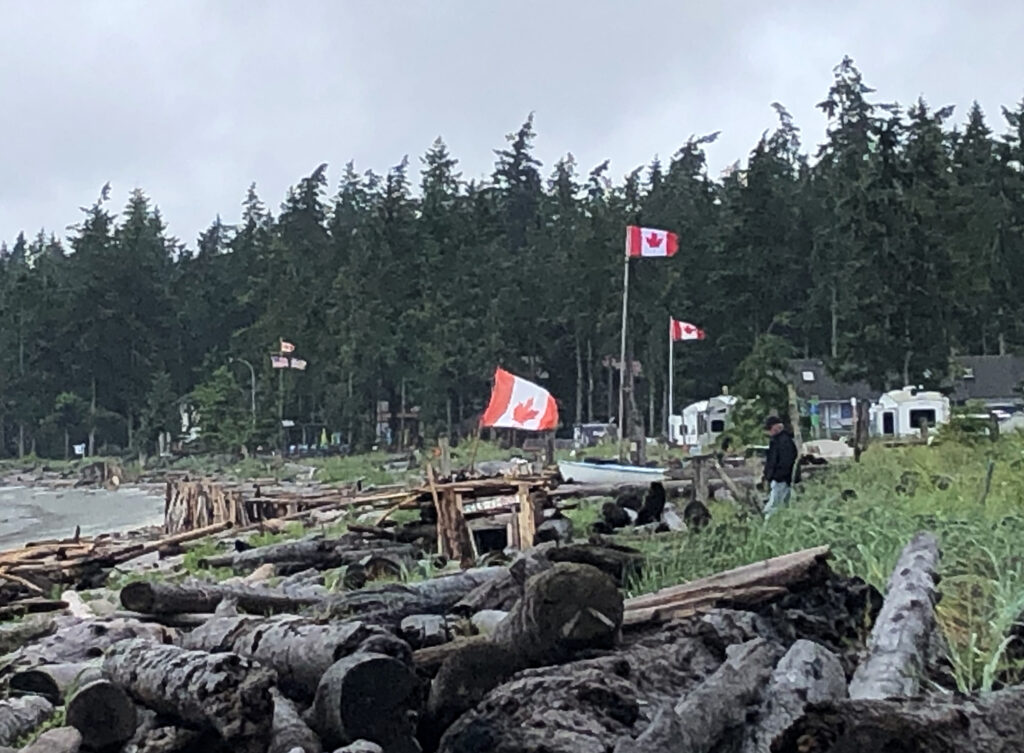
Flag Day in Canada

Given what’s happening in Canada over the US tariffs, it seems fitting that today is Canadian Flag Day (February 15th), 60 years since the new Maple Leaf flag was raised in 1965. I know we’re not much of a flag-waving country – and who even knew we had an official flag day?? – but I will be wearing my Canadian pin when I go out later today. If we were home, I’d be lobbying Ron to hang the flag on our porch, something we only do on July 1st.

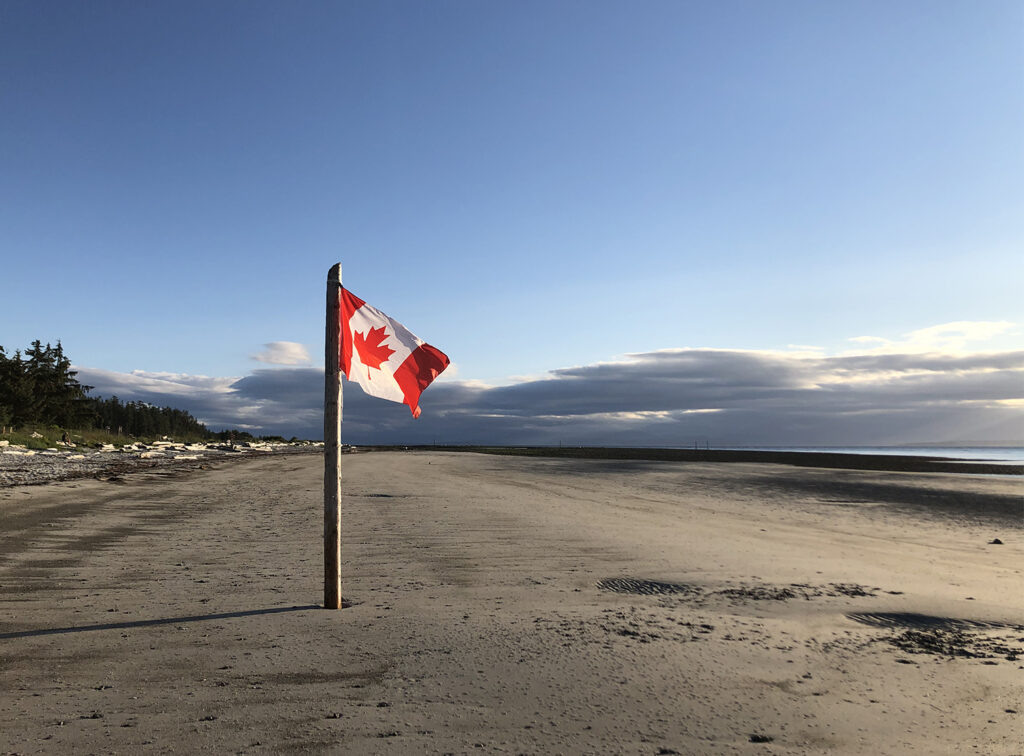
Canadian flags flying on Saratoga Beach (July 2022)

Paseo de Los Canadienses

Speaking of Canadians in Spain and standing up to bullies. One of the main reasons we enjoy coming back to this part of Spain for the winter is La Senda Litoral (the Malaga Coastal Path), a network of paths and paseo maritimos (seafront promenades) that stretches 180 km along the Costa del Sol, from Manilva on the western border to Nerja in the east.

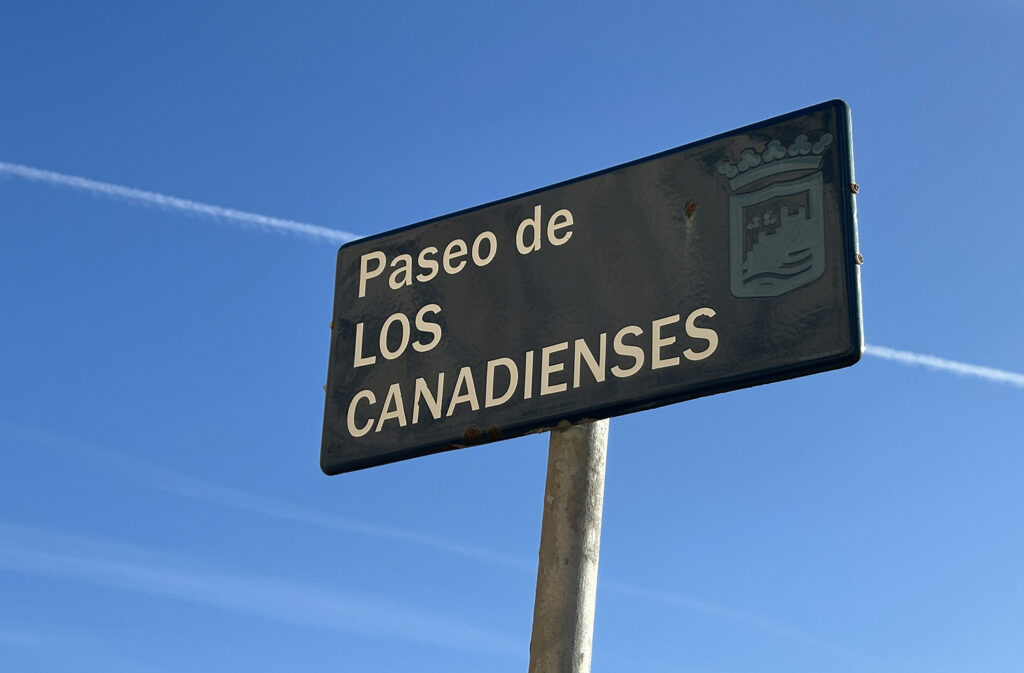
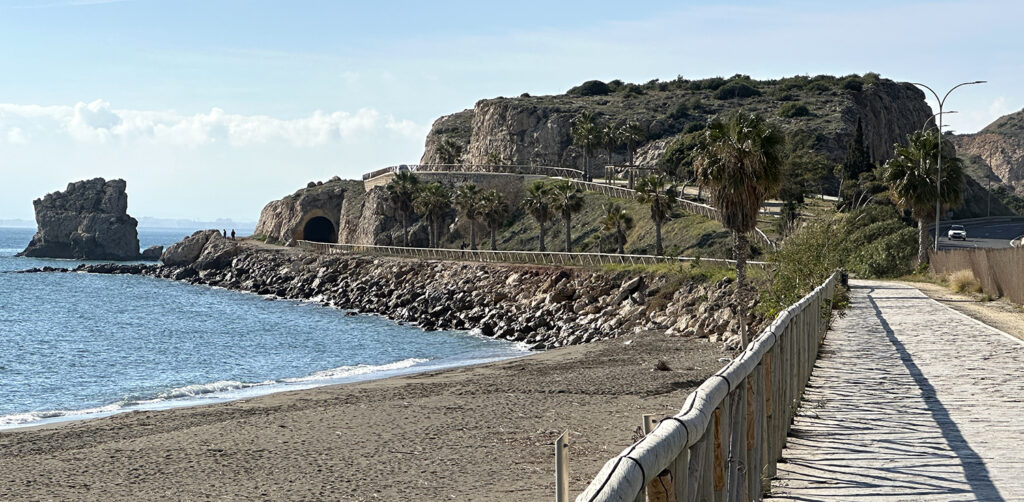
It turns out that a section of the coastal path near where we are staying in La Cala del Moral is named the Walk of Canadians (Paseo de Los Canadienses) in honour of the Canadian doctor Norman Bethune and his work helping thousands of people as they fled Malaga during the Spanish Civil War in February 1937. Bethune and his medical team transported the injured, mainly families and children whose parents had been killed, to the relative safety of Almeria, a town 200 km further east along the coast. It was a particularly dark chapter in Spain’s history known as the Desbandá, and a reminder of what can happen if we’re not vigilant.

Looking west along the coastal path towards the tunnel under El Peñon del Cuervo (February 2025)

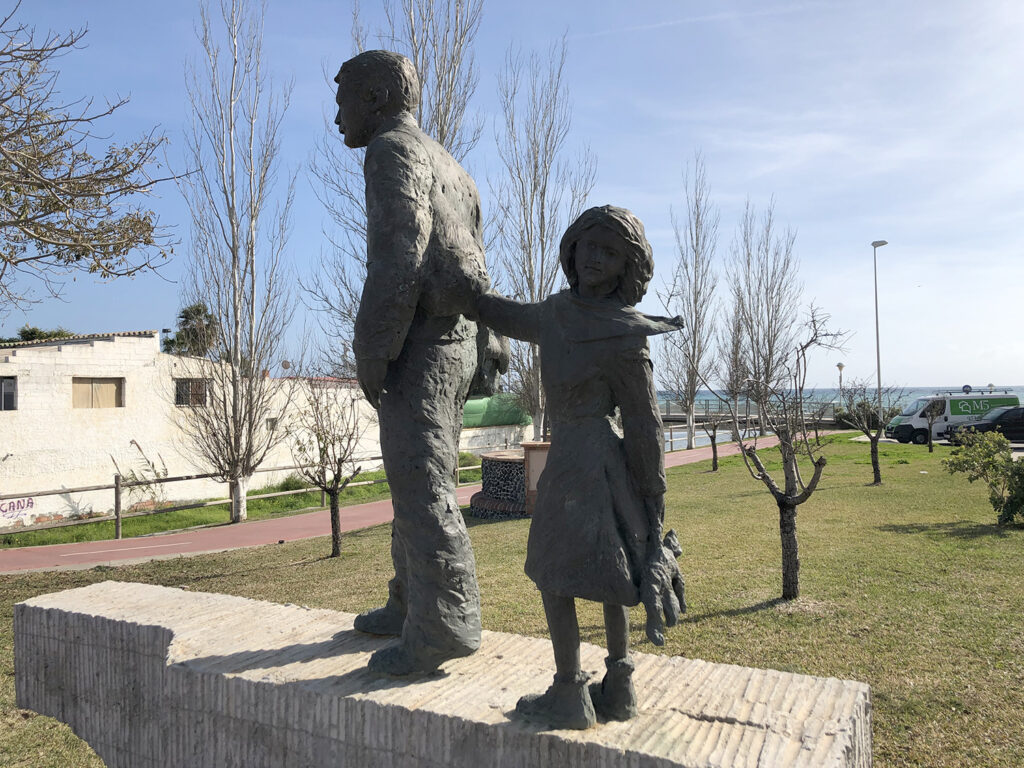
This is not the first time we’ve come across a tribute to Norman Bethune. There is also a statue along the coastal route in Torre del Mar, a 20 minute drive east of us and another one of our favourite walks. The statue was unveiled in February 2016, and shows Bethune walking with a child holding on to the back of his jacket.

Statue of Norman Bethune in Torre del Mar. Photo: February 2020.

Well, that’s it for now. Hope everyone back home is doing well. And keep checking those labels and buying Canadian! It’s early days yet.

Filed Under: La Cala del Moral, Mijas, Paseo Maritimo, Uncategorized

What a difference a month makes

October 4, 2020 By Laurie Jones

Back in Canada. Saratoga Beach on Vancouver Island, BC. June 30, 2020. Laurie Jones photo.

Wow, what a difference a month makes. Make that SEVEN months.

It’s been awhile since I last wrote, about climbing the Mediterranean Steps to the top of the Rock of Gibraltar in early February – another time, another place, another lifetime. Given that I started this blog as a way to keep in touch with family and friends, today seems as good a time as any to re-connect with everyone.

We’ve been back in Canada since the beginning of March, and a lot has happened since then – the global pandemic, the shutting down of the economy, mask wearing and social distancing, climate change and the wildfires still burning in Washington, Oregon and northern California, and the political state of affairs in the US. As for stressful, life-changing events, I’d say we’ve reached the tipping point.

On a more personal note, it turns out that we left Spain in the nick of time. We’d been tracking the coronavirus as it spread from China to Taiwan and South Korea, then Europe. At the beginning of March, there were less than a hundred cases in Spain, mostly in the north, and we didn’t really notice the impact in Málaga. Still, we were anxious to get out before things got worse.

We left Málaga on Sunday, March 8th, a day earlier than planned, and overnighted in Frankfurt. We were on a plane to Canada the next day, breathing huge sighs of relief as the doors closed and the wheels left the ground. The global pandemic was declared two days later, and Spain was under a countrywide lockdown by the end of that week, as was nearly every other country in the western world.

So here we are, seven months later, happy to be back in Canada and British Columbia, and especially back on Vancouver Island and the Oyster River, where the pace of life is definitely slower. Fewer people, fewer cases.

The shape of our lives is relatively unchanged. One of the main differences is we now wear masks when we go shopping, keep our distance from other people, and spray our hands madly with sanitizer when we get back to the car. Apart from that, I still go for my daily walks down to Saratoga Beach, and Ron still goes golfing.

Speaking of Ron. He had his hip replacement surgery at the beginning of July, and was back on the golf course by the end of August. His surgery had originally been scheduled for the beginning of April, but that was put on hold when the pandemic first hit to make sure the hospitals weren’t overwhelmed with cases of the virus. As it turns out, that didn’t happen in B.C., and he was very happy to get in when he did.

Well, that’s the Coles notes version of the past seven months. Before we returned to Canada in March, we were still optimistic. We had already booked our place for this coming winter, and left a couple of boxes in storage with our landlord, anticipating our return. A return that has now been postponed for another year.

Meanwhile, I’m looking forward to enjoying the fall and winter here on the Oyster River. It will be the first year in a long time that we’ve spent a full winter here.

Filed Under: Saratoga Beach, Uncategorized

  • Page 1
  • Page 2
  • Go to Next Page »

Copyright © 2026 · Oyster River Cafe